


 Sold out
-
Sold out
-
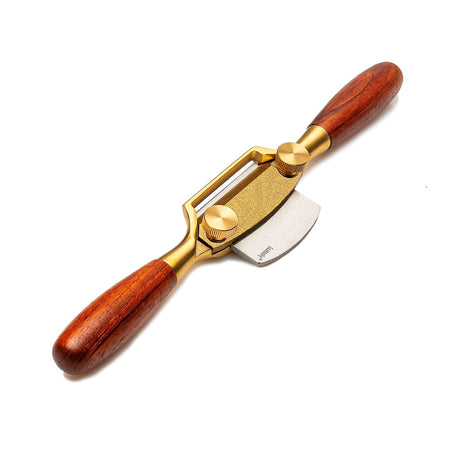
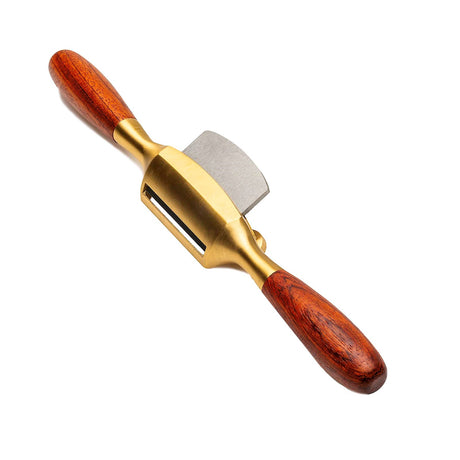
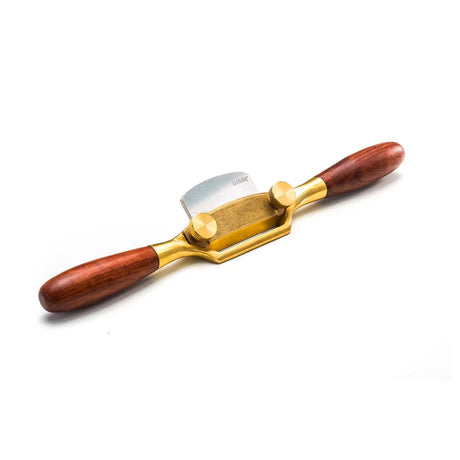


Luban Spokeshaves for Shaping Curves, Edges and Contoured Timber
Luban spokeshaves are hand tools designed for controlled shaping and smoothing of curved, rounded and irregular timber surfaces. Used with two hands and guided along the workpiece, a spokeshave can remove fine, predictable shavings while giving the woodworker direct control over the developing shape. They are particularly useful for furniture components such as chair legs, arms and spindles, as well as tool handles, paddles, curved edges and other projects where a conventional hand plane cannot comfortably follow the surface.
Different spokeshave sole profiles suit different types of work. A flat-bottom spokeshave is a versatile choice for straight sections, gentle convex curves and edge shaping, while curved or round-bottom designs can reach into concave surfaces that a flat sole cannot follow effectively. Choosing the appropriate sole profile makes it easier to maintain consistent contact with the timber and refine complex components without unnecessarily removing surrounding material.
FAQs
What is a Luban spokeshave used for?
A spokeshave is used to shape, refine and smooth timber, particularly on curved or contoured components. Typical applications include shaping chair parts, legs, handles, spindles, paddles and rounded edges. The tool removes controlled shavings much like a hand plane but has a compact body and handles on either side, making it easier to follow changing profiles.
What is the difference between a flat and round-bottom spokeshave?
A flat-bottom spokeshave is generally suited to flat areas, edges and convex or gently changing curves. A round-bottom spokeshave has a curved sole that can enter concave surfaces where a flat sole would bridge across the hollow. Woodworkers who regularly make complex curved components may find both profiles useful because they complement rather than replace one another.
Which spokeshave is best for beginners?
A flat-bottom spokeshave is generally a useful starting point because it can perform a broad range of shaping and smoothing operations. It is suitable for learning blade adjustment, grain reading and controlled shaving removal before progressing to more specialised profiles for tighter concave curves and complex forms.
Can you use a spokeshave on both hardwood and softwood?
Yes. A properly sharpened and adjusted spokeshave can be used on many hardwoods and softwoods. Dense hardwood, figured timber and reversing grain may require a particularly sharp blade and lighter cuts, while softer timber can bruise or tear if the cutting edge is dull. Adjusting technique to the characteristics and grain direction of the individual workpiece is important.
How do you adjust a spokeshave for a fine cut?
Retract the blade and gradually increase its projection until it begins producing a thin shaving. Check that the cutting edge is appropriately aligned across the sole and make small adjustments rather than dramatically increasing the cut. Testing the setting on scrap timber is useful before working on a finished component, particularly when only a small amount of material needs to be removed.
How do you prevent tear-out when using a spokeshave?
Keep the blade sharp, take light cuts and pay close attention to grain direction. When fibres begin lifting ahead of the cutting edge, try working towards the area from the opposite direction rather than forcing the same cut. Difficult figured or reversing grain may require very fine shavings and frequent changes in approach as the contour develops.