



Ioroi
Ioroi Japanese Oire Nomi Chisels with Red Oak Handle
From $89.90Unit price /UnavailableIn stock-
Fujikawa
Fujikawa Japanese Chisels Set of Five Oire Nomi Yellow Paper Steel
$279.00Unit price /UnavailableIn stock -
Fujikawa
Fujikawa Japanese Chisels Set of Ten Oire Nomi Yellow Paper Steel
$535.00Unit price /UnavailableIn stock -
Ioroi
Ioroi Japanese Damascus Oire Nomi Chisel with Ebony Handle
From $249.00Unit price /UnavailableVery low stock (7 units) -
Ioroi
Ioroi Japanese Umeki Oire Nomi Chisels with Red Oak Handle
From $93.50Unit price /UnavailableIn stock 
 Sold out11% off
Ioroi
Ioroi Makers Set of 5 Oire Nomi Japanese Chisels for Wood Joinery
$425.90$479.50Unit price /Unavailable-
Sold out9% off
Ioroi
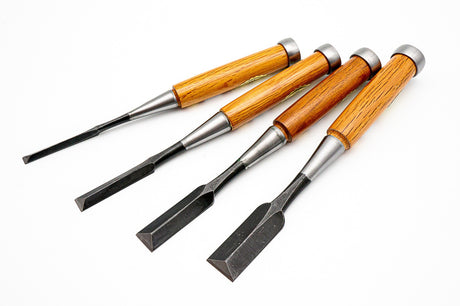
Ioroi Makers Set of 4 Oire Nomi Japanese Chisels for Wood Joinery
$345.90$379.60Unit price /Unavailable -
![Yasaku Kinari Nomi Paring Chisels White Paper Steel Red Oak Handle]()
![Yasaku Kinari Nomi Paring Chisels White Paper Steel Red Oak Handle]()
![Yasaku Kinari Nomi Paring Chisels White Paper Steel Red Oak Handle]()
![Yasaku Kinari Nomi Paring Chisels White Paper Steel Red Oak Handle]()
Fujikawa
Yasaku Kinari Nomi Paring Chisels White Paper Steel Red Oak Handle
From $149.90Unit price /UnavailableIn stock -
![Yasaku Umeki Kotenomi Cranked-Neck Trowel Chisels White Paper Steel Red Oak Handle]()
![Yasaku Umeki Kotenomi Cranked-Neck Trowel Chisels White Paper Steel Red Oak Handle]()
![Yasaku Umeki Kotenomi Cranked-Neck Trowel Chisels White Paper Steel Red Oak Handle]()
Fujikawa
Yasaku Umeki Kotenomi Cranked-Neck Trowel Chisels White Paper Steel Red Oak Handle
From $249.90Unit price /UnavailableIn stock -
 Sold out11% off
Ioroi
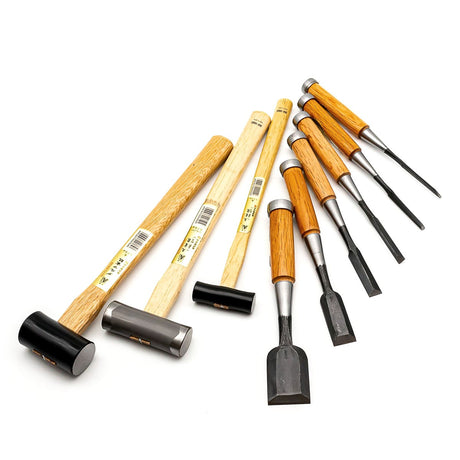
Japanese Joint Master Set of 6 Oire Nomi Chisels & 3 Genno Hammers
$699.90$784.20Unit price /Unavailable -
Sold out9% off
Ioroi
Ioroi Craftperson's Set of 4 Umeki Oire Nomi Japanese Chisels for Wood Joinery
$349.90$384.70Unit price /Unavailable 
 Sold out8% off
Ioroi
Ioroi Craftperson's Set of 4 Super Fine Umeki Oire Nomi Japanese Chisels
$335.90$364.70Unit price /Unavailable-
Fujikawa
Yasaku Sashi Nomi 54mm Slick Chisel White Paper Steel Red Oak Handle
$499.00Unit price /UnavailableIn stock
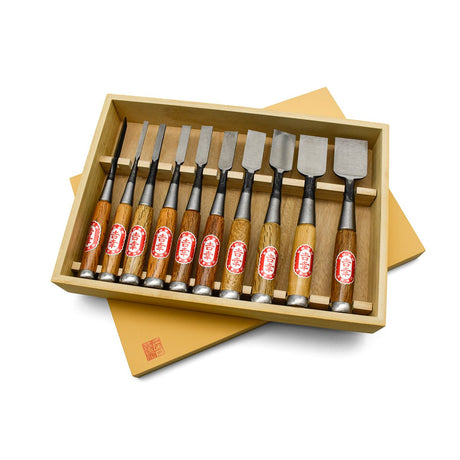
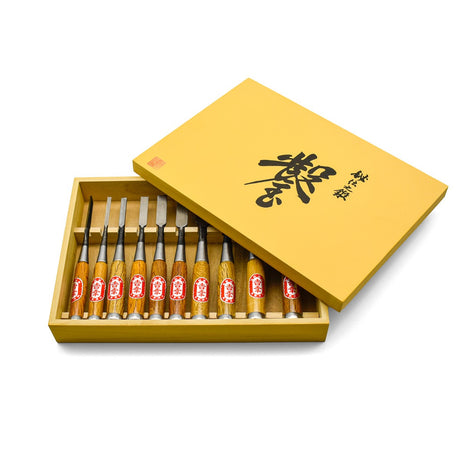


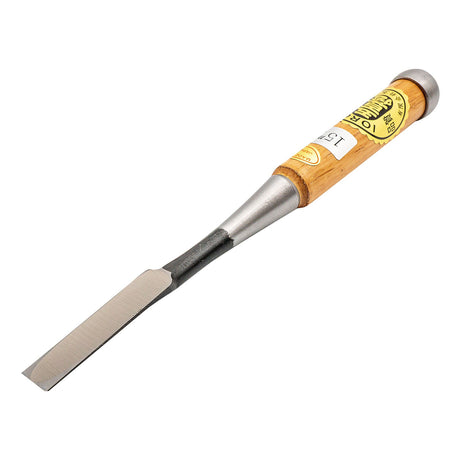
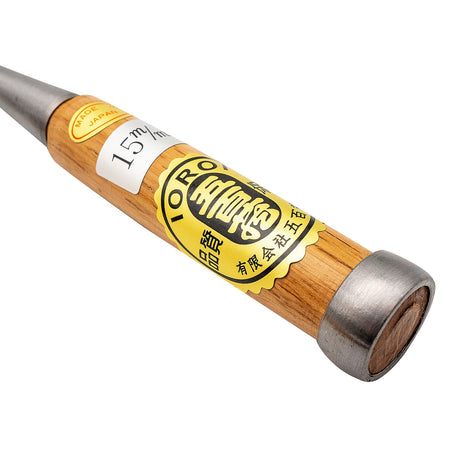
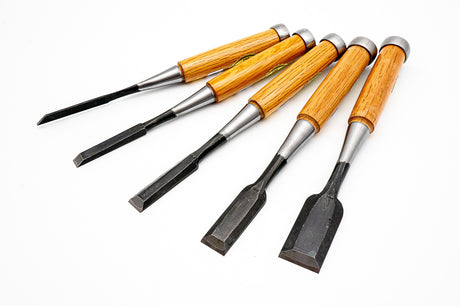
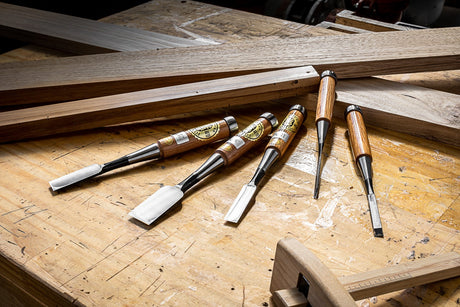
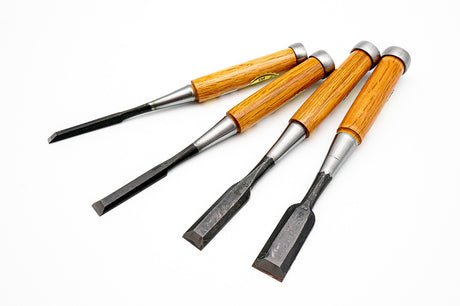
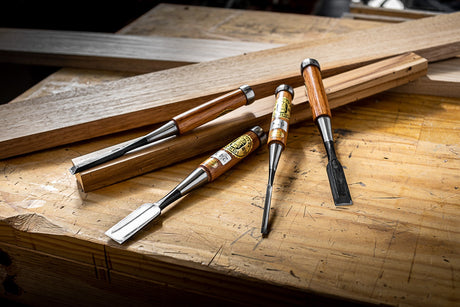




Japanese Chisels for Fine Joinery and Precision Woodworking
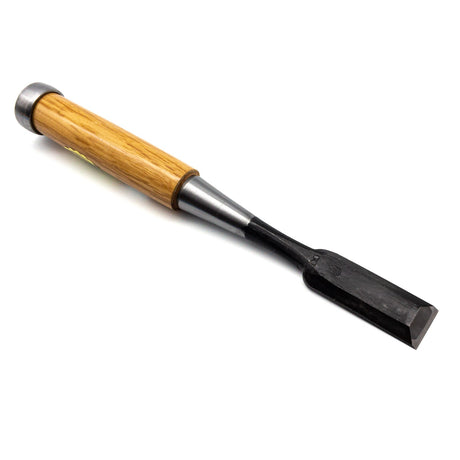
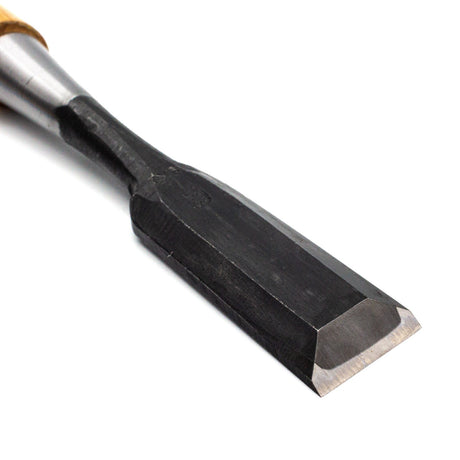
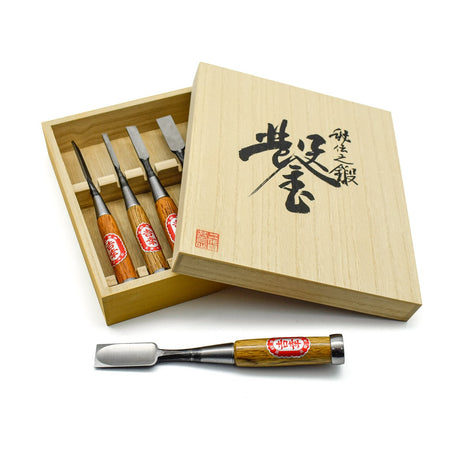
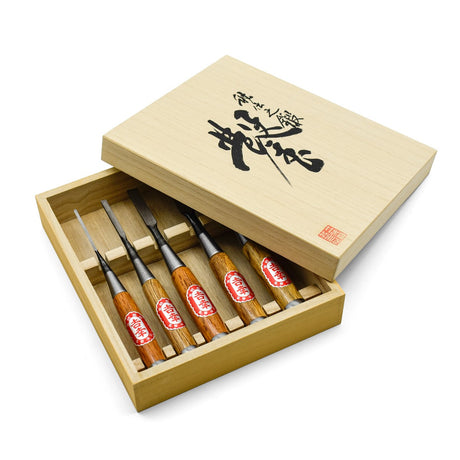
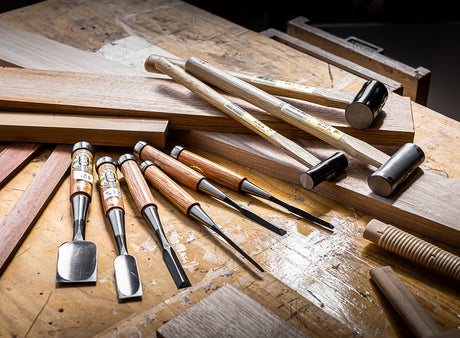
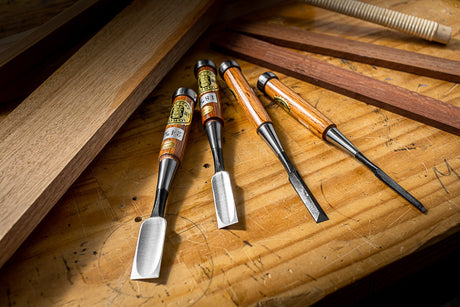
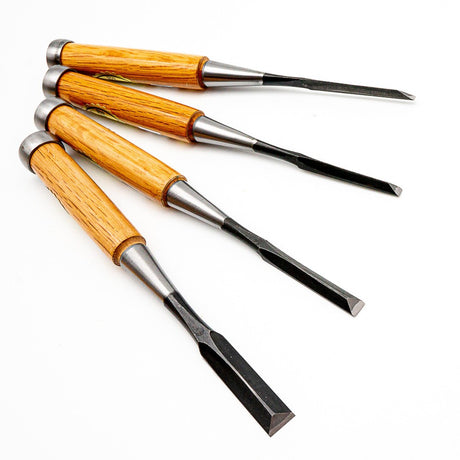
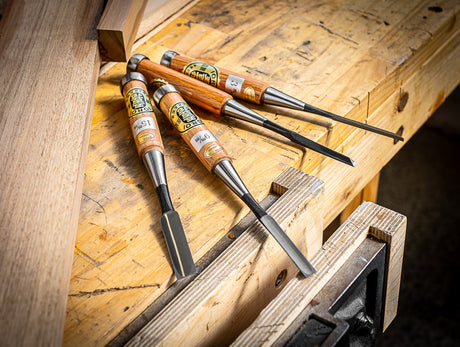
Japanese chisels, commonly known as nomi, are traditional woodworking tools designed for accurate cutting, paring and joinery. They are widely used for tasks such as fitting mortise and tenon joints, cleaning dovetails, trimming shoulders and refining detailed cabinetmaking work. Japanese chisel designs typically combine a hard cutting edge with a tougher supporting layer of steel, creating a blade capable of taking a keen edge while retaining the resilience required for woodworking.
There are several styles of Japanese woodworking chisels suited to different tasks. Oire nomi are relatively compact bench chisels used for general joinery, while longer or heavier chisel patterns can be suited to deeper mortising, timber framing and specialised work.
Japanese chisels often require some preparation before their first serious use. Depending on the individual tool, this can include checking and flattening the back near the cutting edge, sharpening the bevel and correctly setting the metal hoop found on many traditional handles. The hollow-ground area commonly seen on the back of Japanese chisels, known as the ura, reduces the amount of steel that needs to be removed during flattening and sharpening. The narrow flat land immediately behind the cutting edge should be maintained rather than grinding away the hollow unnecessarily.
FAQs
What is a Japanese chisel?
A Japanese chisel, or nomi, is a woodworking chisel traditionally constructed with a very hard cutting-steel layer supported by a tougher, softer steel body. This laminated construction allows the cutting edge to be hardened for good edge retention while the supporting material provides greater toughness. Designs vary according to whether the chisel is intended for bench work, mortising, paring, carving or timber framing.
What are Japanese chisels used for?
Japanese chisels can perform many of the same woodworking operations as other quality chisels, including cutting mortises, fitting tenons, cleaning dovetails, trimming joint shoulders and paring timber. Different styles and blade sizes are designed for different levels of precision and force, so selecting a chisel appropriate to the task helps protect the edge and improves control.
What is the hollow on the back of a Japanese chisel?
The hollow on the back is called the ura. It reduces the area of steel contacting the sharpening stone, making it easier to establish and maintain a flat reference surface around the cutting edge. The ura is an intentional part of the blade's design and should not be deliberately flattened away. Over many sharpenings, maintenance techniques may be required to preserve an appropriate flat land at the cutting edge.
Do new Japanese chisels need sharpening before use?
Many Japanese chisels benefit from initial sharpening and preparation even when supplied with a relatively sharp factory edge. This may involve inspecting the back, refining the bevel and honing the cutting edge. The amount of preparation varies between manufacturers and individual chisels, so unnecessary removal of steel should be avoided.
What is the metal hoop on a Japanese chisel handle for?
The metal hoop, often called a katsura, reinforces the striking end of many traditional Japanese chisel handles. On chisels designed to be struck, the hoop may require initial setting so that it sits correctly and the end grain of the handle forms a protective margin around it. Preparation methods vary, so it is worth following the chisel manufacturer's instructions before adjusting a new handle.
Can Japanese chisels be struck with a mallet?
Many Japanese bench and mortising chisels are designed for controlled striking, but not every Japanese chisel is intended for heavy mallet work. The chisel style, handle construction and intended application should determine how it is used. Fine paring tools should not be subjected to the same impact as a chisel specifically designed for mortising or heavier joinery.
Are Japanese chisels suitable for beginners?
Yes. A beginner can use Japanese chisels effectively, although learning correct sharpening and tool handling is particularly worthwhile. Starting with a few commonly useful widths rather than a large set allows a woodworker to develop sharpening, paring and joinery skills before adding more specialised sizes. Keeping the edge sharp also makes controlled cutting easier and reduces the temptation to use excessive force.
How should Japanese chisels be stored and maintained?
Keep the blade clean and dry, particularly after using waterstones, as carbon steels used in many Japanese chisels can be susceptible to corrosion. A suitable light protective oil may be applied for storage where appropriate. Chisels should also be stored so their cutting edges cannot strike other tools, both to protect the finely sharpened edge and to reduce the risk of injury when reaching for a tool.