


 Save $0.00
Torquata
Torquata Heavy Duty Extended Foot Pipe Clamp suits 3/4in Pipe
From $27.90Unit price /UnavailableIn stock-
8% off
Pony Jorgensen
Pony Jorgensen Extended Foot Pipe Clamp Set of 4 for 3/4in Pipe
$157.90$171.60Unit price /UnavailableIn stock -
8% off
Torquata
Torquata Heavy Duty Extended Foot Pipe Clamp with 3/4in Galvanised Pipe
From $47.90$51.80Unit price /UnavailableIn stock -
Pony Jorgensen
Pony Jorgensen Extended Foot Pipe Clamp for 3/4in Pipe Panel Clamping
$42.90Unit price /UnavailableIn stock  7% off
Pony Jorgensen
Pony Jorgensen Extended Foot Pipe Clamp with 1200mm 3/4in Pipe
$62.90$67.80Unit price /UnavailableIn stock-
7% off
Pony Jorgensen
Pony Jorgensen Extended Foot Pipe Clamp with 1500mm 3/4in Pipe
$64.90$69.80Unit price /UnavailableIn stock -
7% off
Pony Jorgensen
Pony Jorgensen Extended Foot Pipe Clamp with 900mm 3/4in Pipe
$61.90$66.80Unit price /UnavailableIn stock -
8% off
Pony Jorgensen
Pony Jorgensen Extended Foot Pipe Clamp with 2100mm 3/4in Pipe
$69.90$75.80Unit price /UnavailableIn stock -
7% off
Pony Jorgensen
Pony Jorgensen Extended Foot Pipe Clamp with 1800mm 3/4in Pipe
$67.50$72.80Unit price /UnavailableIn stock


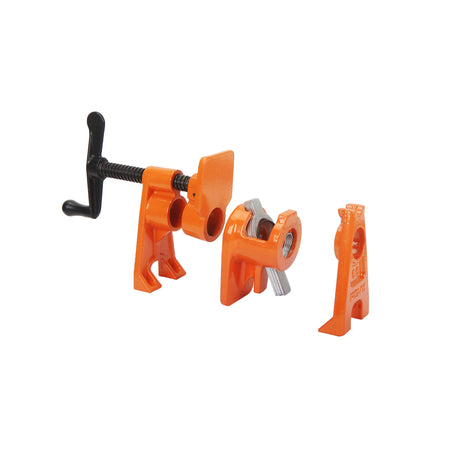
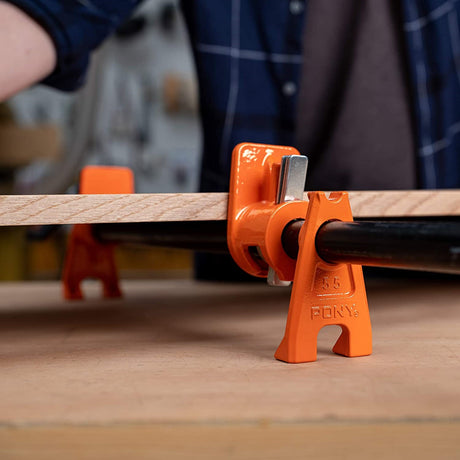
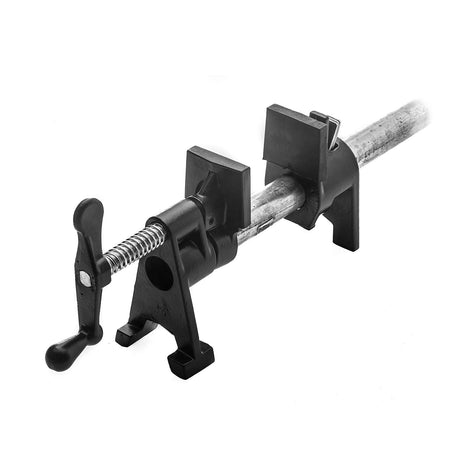


Extended Foot Pipe Clamps for Stable Woodworking Glue-Ups
Extended foot pipe clamps combine the adaptable capacity of a pipe clamp with a larger supporting foot designed to improve stability on the workbench. The extended base helps keep the clamp upright and provides additional clearance beneath the pipe, making it easier to position timber during furniture assembly, panel glue-ups, cabinet construction and other demanding woodworking jobs. This can be particularly useful when several pipe clamps need to be arranged together before adhesive is applied.
Like conventional pipe clamps, an extended foot pipe clamp typically consists of a screw-operated clamping head and an adjustable tail stop fitted to a compatible length of pipe. The pipe determines much of the available clamping capacity, allowing a clamp fixture to be configured for anything from smaller assemblies to wide panels and furniture components. The extended foot does not replace correct work support, but it can make the clamp easier to position and help provide a more convenient working height above the bench.
FAQs
What is an extended foot pipe clamp?
An extended foot pipe clamp is a woodworking pipe clamp featuring an enlarged or extended supporting base beneath the clamp head. The foot helps the clamp stand more securely on a bench and can raise the pipe and workpiece above the surface. The actual clamping action remains similar to a conventional pipe clamp, with an adjustable head and screw mechanism applying pressure along a compatible pipe.
What is the advantage of an extended foot on a pipe clamp?
The main advantage is improved support and stability during setup and assembly. A larger foot can make the clamp less prone to tipping while timber is being positioned and may provide useful clearance between the pipe and workbench. This can make multi-clamp glue-ups easier to organise, although large or unbalanced assemblies should still be independently supported where necessary.
Are extended foot pipe clamps good for table top glue-ups?
Yes. Pipe clamps are commonly used for edge-gluing boards into table tops and other wide panels because their capacity can be configured to suit the workpiece. Extended feet can make the clamps easier to arrange on a bench before the boards are positioned. For a flat panel, use several appropriately spaced clamps and apply pressure gradually across the assembly.
How do I keep a timber panel flat when using pipe clamps?
Begin with straight stock and accurately jointed mating edges. Position clamps at suitable intervals and tighten them progressively instead of fully tightening one clamp before the others. Alternating clamps above and below the panel can help balance forces, while straight cauls across the face can assist with keeping individual boards aligned during the glue-up.
How much pressure should I apply with a pipe clamp?
Apply enough pressure to bring properly prepared joint surfaces into firm, continuous contact. Excessive tightening can bow components, damage softer timber or unnecessarily stress the clamp and pipe. If a joint requires unusually high force to close, check the fit and alignment of the components before adding more clamping pressure.
What is the difference between a pipe clamp and a bar clamp?
A pipe clamp uses a separate length of compatible pipe as the structural member connecting its clamp heads, so its capacity can often be changed by using a different pipe length. A bar clamp has its own integral bar and is normally supplied with a defined clamping capacity. Both are useful for woodworking, with pipe clamps particularly attractive where long or varied clamping capacities are required.